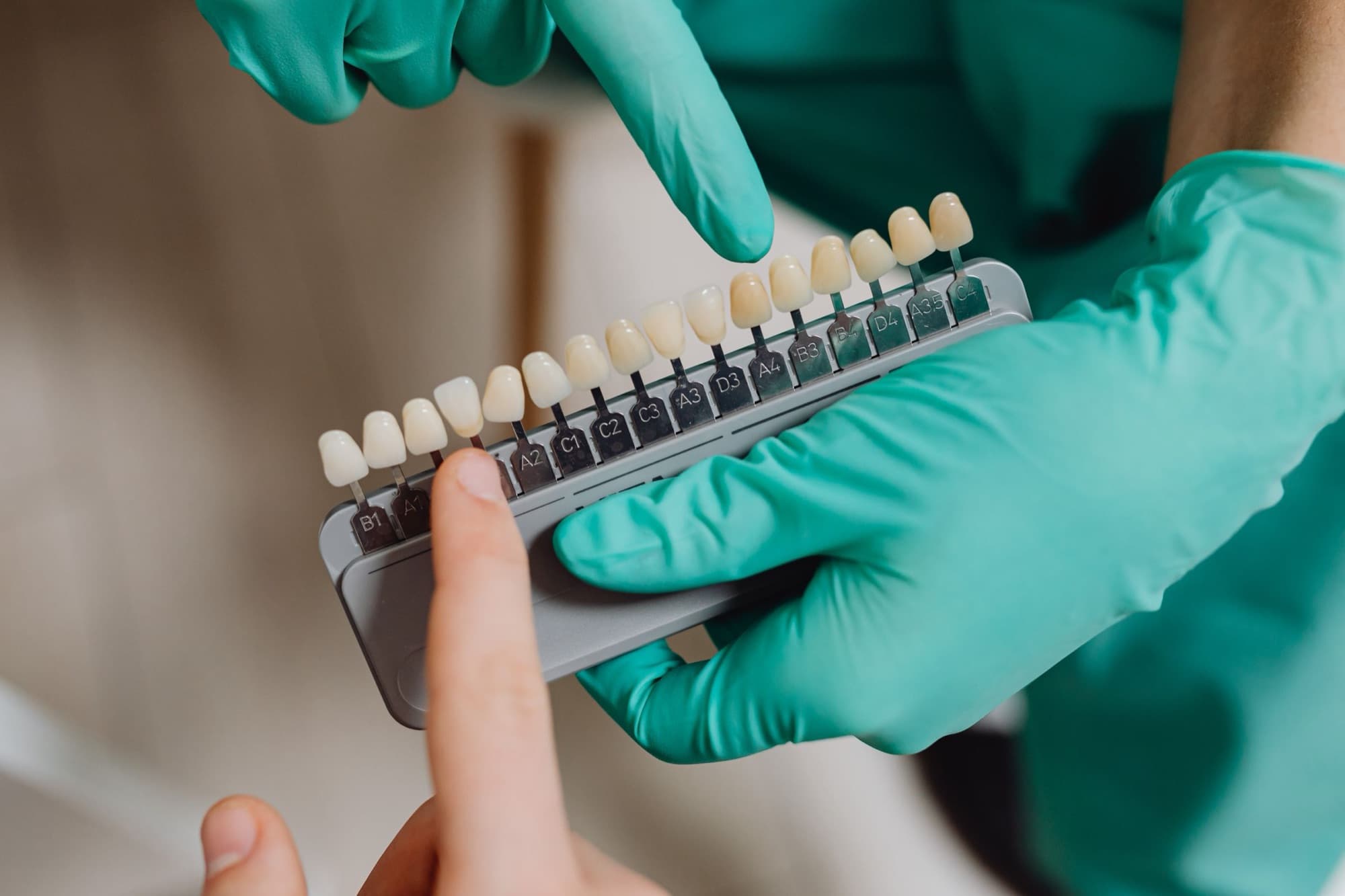
Teeth Whitening
Teeth whitening is an aesthetic procedure that aims to lighten discolouration that develops on the teeth over time, using whitening gels applied in a controlled way under clinical conditions and planned mindful of enamel health.
What is it?
Teeth whitening aims to lighten the shade of the teeth with whitening agents that act on the colour molecules on the surface and within the structure of the tooth. There are two main approaches: in-office whitening carried out at the clinic under the dentist's supervision, and at-home whitening applied with custom trays prepared by the dentist.
Assessing the health of the teeth and gums before the procedure is important, because if there is decay or a gum problem it may need to be addressed first. Whitening is applied with the enamel structure in mind.
Who is it for?
Whitening may be considered for people with surface discolouration from tea, coffee, smoking or ageing, whose gums and teeth are healthy. The degree of lightening that can be achieved varies from person to person according to the starting colour of the tooth and the type of discolouration.
Artificial surfaces such as fillings, veneers and crowns do not change colour with whitening agents. In situations such as pregnancy, breastfeeding or marked sensitivity, the approach is determined by the dentist.
How does the process work?
The process begins with examination and, when needed, scaling. In in-office whitening, gel is applied after protective measures are taken and may be repeated within the session. In at-home whitening, a set programme is followed with custom trays and a suitable gel.
Some people may experience temporary sensitivity during or after the procedure; this usually eases within a short time.
Aftercare and maintenance
Avoiding dark-coloured foods and drinks in the first few days after whitening may be recommended. How long the result lasts varies from person to person depending on dietary habits, smoking and oral hygiene.
Frequently asked
Does whitening harm the teeth?
When applied under a dentist's supervision at a suitable concentration and mindful of enamel health, whitening is generally well tolerated. Temporary sensitivity may occur; in most cases this eases within a short time.
How long does the effect of whitening last?
How long it lasts varies from person to person according to diet, smoking and oral hygiene habits. Since discolouration can recur over time, a touch-up may be done with the dentist's advice when needed.
Do fillings and crowns also whiten?
Whitening agents act only on natural tooth tissue; the colour of fillings, veneers and crowns does not change. This surface difference is taken into account in the treatment plan.
Come to my clinic in Alsancak. Message on WhatsApp — I reply within 24 hours.
Results of any surgical or interventional procedure may vary from person to person. We recommend getting detailed advice from your dentist beforehand.